
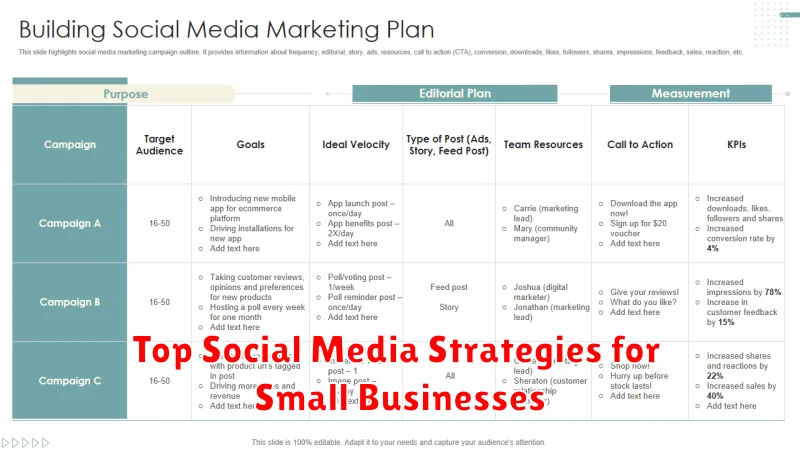
In today’s digital age, a strong social media presence is no longer optional for small businesses. It’s an essential component of any successful marketing strategy. Social media marketing offers unparalleled opportunities to connect with your target audience, build brand awareness, and drive sales. This article will explore the top social media strategies that small businesses can implement to achieve these goals. We’ll delve into practical, actionable steps that can help you maximize your impact on platforms like Facebook, Instagram, Twitter, and more, ultimately enhancing your overall business growth.
Whether you are just beginning your social media journey or looking to refine your existing social media strategy, this guide is designed to provide valuable insights. We’ll cover key areas such as defining your target audience, selecting the right social media platforms, creating engaging content, utilizing social media advertising effectively, and measuring your results. By implementing these top social media strategies, you can leverage the power of social media marketing to reach new customers, strengthen customer relationships, and ultimately achieve greater success for your small business.
Choosing the Right Platforms
Not all social media platforms are created equal, and what works for one business might not work for another. Identifying your target audience is the first crucial step. Where do they spend their time online?
Consider your business goals. Are you focused on brand awareness, driving traffic to your website, or generating leads? Different platforms excel in different areas. For visually-driven businesses, Instagram or Pinterest might be ideal. For B2B businesses, LinkedIn is often a strong choice.
Resource allocation is also key. Don’t spread yourself too thin. It’s better to focus your efforts on a few key platforms where you can actively engage and build a strong presence.
Setting Clear Goals and KPIs
Establishing clear goals is paramount to a successful social media strategy. Without defined objectives, your efforts become scattered and ineffective. Ask yourself what you want to achieve through social media. Is it increased brand awareness, driving website traffic, generating leads, or boosting sales?
Once your goals are set, define Key Performance Indicators (KPIs) to measure your progress. These metrics provide quantifiable data to track your success. Relevant KPIs might include follower growth, engagement rate, website clicks, lead generation, or conversion rates.
Choosing the right KPIs depends on your specific goals. For example, if your goal is brand awareness, focus on reach and impressions. If your goal is driving sales, track conversions and website clicks originating from social media.
Building a Content Calendar
A content calendar is a crucial tool for managing your social media presence. It provides a structured plan for your posts, ensuring consistent engagement with your audience.
Start by determining your posting frequency. Daily posting isn’t always necessary; quality over quantity is key. Choose a schedule you can realistically maintain.
Next, plan the types of content you’ll share. This could include promotional posts, educational content, behind-the-scenes glimpses, or user-generated content. Varying your content keeps your audience engaged.
Finally, use a calendar tool. Whether it’s a spreadsheet, a dedicated app, or even a physical planner, choose a system that works for you and helps you stay organized.
Engaging with Followers Consistently
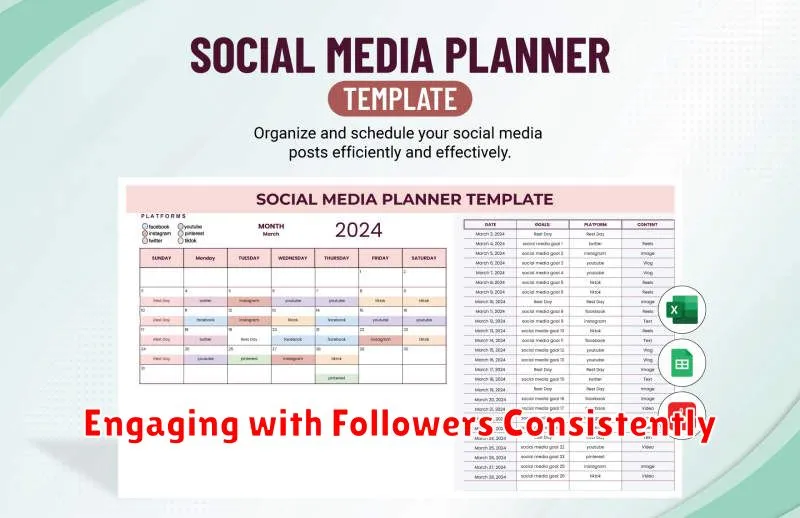
Consistent engagement is crucial for building a strong social media presence. Responding to comments and messages promptly shows followers you value their interaction. This fosters a sense of community and encourages further engagement.
Don’t just react; initiate conversations. Ask questions, run polls, and create content that encourages discussion. This transforms passive followers into active participants.
Consistency also applies to your posting schedule. A regular posting cadence keeps your audience engaged and expecting new content. Find a rhythm that works for your business and stick to it.
Using Hashtags Effectively
Hashtags are essential for increasing the visibility of your social media posts. Relevance is key. Use hashtags that are directly related to your content and industry. Don’t just use popular hashtags if they don’t fit your post.
Research relevant hashtags. Tools are available to help you find popular and trending hashtags within your niche. Experiment with different hashtags to see which ones perform best for your particular audience.
Avoid using too many hashtags. While platforms like Instagram allow for up to 30, using a smaller, more targeted selection is often more effective. Focus on quality over quantity.
Collaborating with Micro-Influencers
Micro-influencers present a unique opportunity for small businesses. These individuals have a smaller, but highly engaged, following within a specific niche. This targeted audience allows for more effective and authentic marketing.
Partnering with micro-influencers can be a cost-effective strategy compared to larger-scale influencer campaigns. They often offer more personalized content and genuine interaction with their followers, leading to increased brand trust and credibility.
When choosing micro-influencers, consider their relevance to your business and their audience’s alignment with your target market. Look for authentic engagement and a genuine connection with their followers.
Running Paid Ad Campaigns
Paid advertising on social media platforms offers a powerful way to reach a wider audience and achieve specific business objectives. Platforms like Facebook, Instagram, and Twitter provide robust advertising tools that allow you to target your desired demographics based on interests, location, behavior, and more. Carefully consider your budget and campaign goals before launching a campaign.
Effective paid campaigns require compelling ad creatives, clear calls to action, and continuous monitoring and optimization. A/B testing different ad variations can help you identify what resonates best with your target audience. Track key metrics such as click-through rates, conversion rates, and cost per acquisition to measure campaign performance and make data-driven adjustments.
Analyzing Post Performance
Analyzing post performance is crucial for optimizing your social media strategy. Track key metrics to understand what resonates with your audience. This allows you to refine your content and improve results.
Pay close attention to engagement metrics such as likes, comments, and shares. These indicate audience interest and content effectiveness. Additionally, monitor your reach, impressions, and follower growth to gauge overall brand visibility and expansion.
Use analytics platforms provided by each social media network. This data will inform future content creation and scheduling strategies, ensuring you are reaching the right audience with the right message at the right time.
Using Social Media Management Tools
Social media management tools are essential for small businesses to streamline their social media efforts. These tools provide a centralized platform to schedule posts, analyze performance, and engage with audiences across various platforms. This efficiency saves valuable time and resources.
Key features to look for include:
- Scheduling: Plan and automate content publishing.
- Analytics: Track key metrics to understand what resonates with your audience.
- Engagement: Respond to comments and messages efficiently.
By leveraging these tools, small businesses can maintain a consistent online presence and maximize their social media impact.
Repurposing Content for More Reach
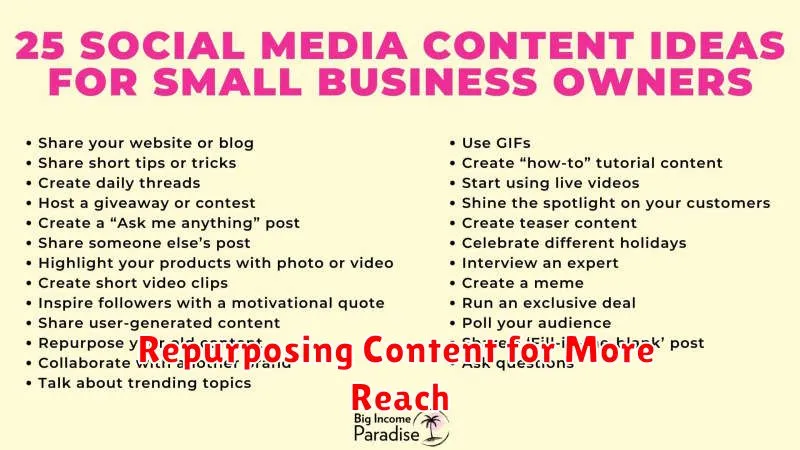
Repurposing content is a powerful strategy for small businesses to maximize their social media impact. It involves adapting existing content into different formats for various platforms.
For instance, a blog post can be transformed into:
- A series of engaging social media posts with key takeaways.
- Short, impactful video clips for platforms like Instagram Reels or TikTok.
- Infographics highlighting core data or statistics.
- Quotes for image posts that resonate with the target audience.
This approach saves time and resources while ensuring consistent messaging across different channels. It also allows businesses to reach a wider audience by catering to varying content consumption preferences.
