
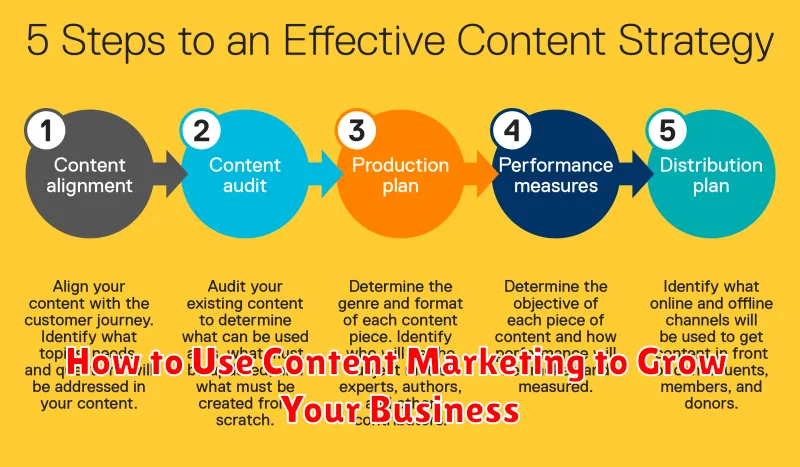
In today’s digital landscape, content marketing has become an indispensable tool for businesses seeking sustainable growth. It involves the creation and distribution of valuable, relevant, and consistent content to attract and retain a clearly defined audience — and, ultimately, to drive profitable customer action. Content marketing goes beyond traditional advertising, focusing on providing information and engaging with your audience organically. By leveraging the power of content marketing, businesses can establish themselves as thought leaders, build trust with their target audience, and ultimately, achieve significant business growth.
This comprehensive guide will explore the essential steps to effectively utilize content marketing to grow your business. From defining your target audience and developing a content marketing strategy to creating compelling content and measuring your results, this guide provides actionable insights and practical tips to help you harness the power of content marketing for success. Discover how to create a robust content marketing plan, choose the right content marketing channels, and measure the return on investment (ROI) of your content marketing efforts.
What Is Content Marketing?
Content marketing is a strategic marketing approach focused on creating and distributing valuable, relevant, and consistent content to attract and retain a clearly defined audience — and, ultimately, to drive profitable customer action.
Instead of pitching your products or services, you are providing truly relevant and useful information to your prospects and customers to help them solve their problems.
Choosing the Right Content Formats
Selecting the right content formats is crucial for effective content marketing. Your chosen format should align with your target audience’s preferences and the specific goals of your content.
Consider these popular formats:
- Blog Posts: Ideal for sharing in-depth information, insights, and updates.
- Infographics: Visually appealing way to present data and complex information.
- Videos: Engaging format for tutorials, product demos, and behind-the-scenes glimpses.
- Case Studies: Showcase successful client stories and demonstrate the value of your product or service.
- eBooks and White Papers: Offer comprehensive guides and in-depth analyses on specific topics.
Experiment with different formats to see what resonates best with your audience and yields the strongest results.
Creating a Content Calendar
A content calendar is a crucial tool for organizing and scheduling your content marketing efforts. It provides a structured plan that ensures consistent publishing and helps you align your content with your overall marketing goals.
Start by choosing a format that suits your needs. This could be a simple spreadsheet, a dedicated content calendar software, or even a shared online document. Key elements to include are the content topic, target audience, publishing date and time, assigned writer or team, and the content format (blog post, video, infographic, etc.).
Regularly review and adjust your content calendar based on performance and evolving marketing objectives. This ensures your content remains relevant and effective in achieving your business goals.
SEO Basics for Blog Posts
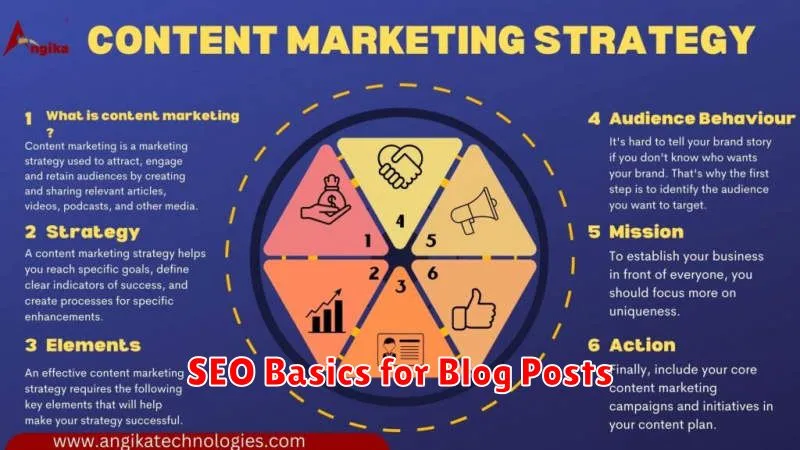
Search engine optimization (SEO) is crucial for driving organic traffic to your blog posts. By optimizing your content, you increase its visibility in search engine results pages (SERPs). This section covers key SEO basics to consider when creating blog content.
Keyword Research: Identify relevant keywords that your target audience uses when searching for information related to your business. Use keyword research tools to find high-volume, low-competition keywords to incorporate naturally within your content.
On-Page Optimization: Optimize elements within your blog post, including the title tag, meta description, headings (H1-H6), and image alt text. Ensure your target keyword appears in these elements, but avoid keyword stuffing. Focus on providing a positive user experience.
Content Quality: Create high-quality, informative, and engaging content that provides value to your readers. Content length also plays a role; longer, comprehensive articles tend to perform better in search rankings. Ensure your content is original and avoids plagiarism.
Repurposing Content for Social Media
Repurposing existing content for social media is a highly effective way to maximize your reach and engagement. It saves time and resources while ensuring consistent messaging across different platforms.
Consider transforming a blog post into a series of tweets highlighting key takeaways, or create engaging Instagram graphics using quotes and statistics from a white paper. A webinar can be segmented into shorter video clips ideal for Facebook or LinkedIn. This cross-platform promotion amplifies your message and exposes it to a wider audience.
Remember to tailor the format and tone to suit each platform’s unique characteristics. What works well on Twitter may not be as effective on LinkedIn.
Using Case Studies and Testimonials
Case studies and testimonials provide powerful social proof, demonstrating the value of your product or service through real-world examples and client experiences. They build trust and credibility, helping potential customers overcome doubts and objections.
Case studies delve into specific client challenges, the solutions implemented, and the quantifiable results achieved. They provide a detailed narrative showcasing your expertise.
Testimonials offer concise statements from satisfied customers highlighting the positive impact of your offerings. Short, impactful quotes can be particularly effective.
Strategically incorporating these elements throughout your content marketing efforts, such as on your website, blog, and social media channels, can significantly influence purchasing decisions.
Tracking Engagement Metrics
Tracking engagement metrics is crucial for understanding how your content resonates with your audience. This data informs future content strategy and helps optimize your efforts for better results.
Key metrics to track include:
- Website traffic: Monitor unique visitors, page views, and bounce rate to understand how well your content attracts and retains attention.
- Social media engagement: Track likes, shares, comments, and mentions to gauge audience interest and the virality of your content.
- Time on page: Measure the duration visitors spend on your content to assess how engaging and informative it is.
- Lead generation: Track how many leads are generated through your content marketing efforts, such as newsletter sign-ups or content downloads.
Tools for Content Creation and Scheduling
Leveraging the right tools can significantly streamline your content marketing efforts. For content creation, consider options like Canva for visuals, Grammarly for proofreading, and Google Docs for collaborative writing.
Scheduling tools are essential for maintaining a consistent online presence. Platforms such as Buffer, Hootsuite, and Later allow you to plan and automate your content distribution across various social media channels. These tools often offer analytics to track post performance and engagement.
Content for Every Stage of the Funnel
Content marketing success relies on tailoring content to each stage of the sales funnel. This ensures you’re addressing the specific needs and interests of potential customers at every touchpoint.
At the awareness stage, focus on educational content that addresses broad industry questions. Think blog posts, articles, and infographics.
The consideration stage requires more specific content that showcases solutions. Case studies, white papers, and webinars are effective here.
Finally, at the decision stage, provide content that directly supports purchasing decisions. This could include product demos, free trials, and testimonials.
How to Stay Consistent Long-Term
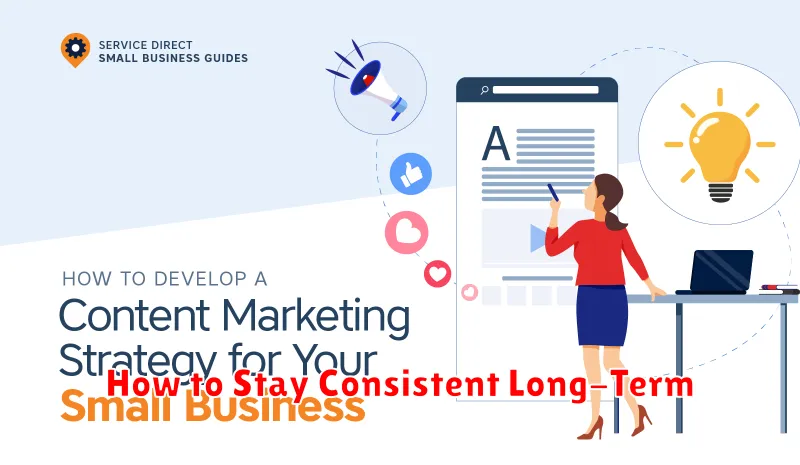
Maintaining consistent content creation can be challenging. Planning is key. Develop a content calendar to schedule posts and establish a manageable rhythm. This helps avoid feeling overwhelmed and ensures regular output.
Batching content creation is another effective strategy. Dedicate specific blocks of time to create multiple pieces of content at once. This streamlines the process and allows for more efficient work.
Finally, remember your audience. Understanding their needs and preferences helps generate relevant content ideas, keeping you motivated and engaged in the long run.
