
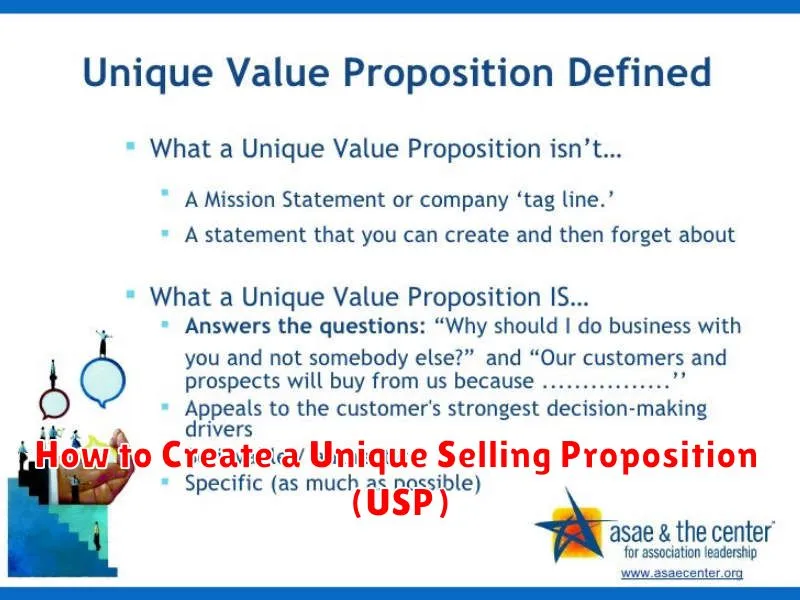
In today’s competitive market, a Unique Selling Proposition (USP) is crucial for any business seeking to stand out and thrive. A USP clearly defines what makes your product or service different and better than the competition, providing a compelling reason for customers to choose you. Developing a strong USP requires careful consideration of your target audience, competitive landscape, and your own strengths. This article will guide you through the process of crafting a compelling and effective Unique Selling Proposition that resonates with your customers and drives business growth.
This comprehensive guide will explore the essential elements of a powerful USP, providing practical steps and real-world examples to help you create your own. From identifying your target market and analyzing your competitors to defining your key benefits and crafting a concise and memorable message, you will learn how to develop a Unique Selling Proposition that effectively communicates your value and sets you apart. By understanding and implementing the strategies outlined in this article, you can leverage your USP to attract more customers, increase sales, and build a stronger brand identity.
What Is a USP and Why It Matters
A Unique Selling Proposition (USP) is a statement that clearly articulates how your product or service is different from and better than the competition. It highlights the specific benefit that customers receive by choosing your offering over others.
A strong USP is crucial for several reasons. It helps you stand out in a crowded marketplace, attract your target audience, justify your pricing, and ultimately, drive sales. Without a clear USP, customers may struggle to understand your value and opt for a competitor instead.
Identifying Customer Pain Points
A crucial step in developing a unique selling proposition (USP) involves understanding your target customer’s pain points. These are the problems, frustrations, or unmet needs they experience related to your industry or product category.
Identifying these pain points requires thorough research. Methods include customer surveys, interviews, and analyzing online reviews and social media discussions. Look for recurring themes and prioritize the pain points that are most significant and widespread among your target audience.
By accurately identifying and understanding these pain points, you can position your USP to directly address them, offering a compelling solution and differentiating yourself from competitors.
Highlighting What Makes You Different
A compelling USP hinges on identifying your distinct advantages. This requires a thorough understanding of your target audience and competitors. Ask yourself: What specific problems do you solve that others don’t? What unique benefits do you offer?
Consider your internal strengths. Do you possess superior technology, a specialized skill set, or an exceptionally efficient process? Perhaps your company culture fosters a uniquely positive customer experience. These internal factors can translate into powerful differentiators.
Finally, focus on the value proposition. Don’t just list features; explain how those features benefit your customers. Does your product save them time, money, or effort? Does it enhance their lives in a meaningful way? Clearly articulating this value is key to a strong USP.
Making Your USP Clear and Concise
A clear and concise USP is crucial for effective communication. It should be easily understood by your target audience and leave a lasting impression. Avoid jargon and complex language. Focus on the core benefit you offer.
Brevity is key. Aim for a USP that can be quickly grasped and remembered. Think of it as a short, memorable phrase that encapsulates your unique value proposition. A lengthy USP will likely be ignored or forgotten.
Test your USP on your target audience. Ensure they understand its meaning and perceive the value you’re communicating. Refine your USP based on feedback until it resonates effectively with your potential customers.
Using Your USP in Branding
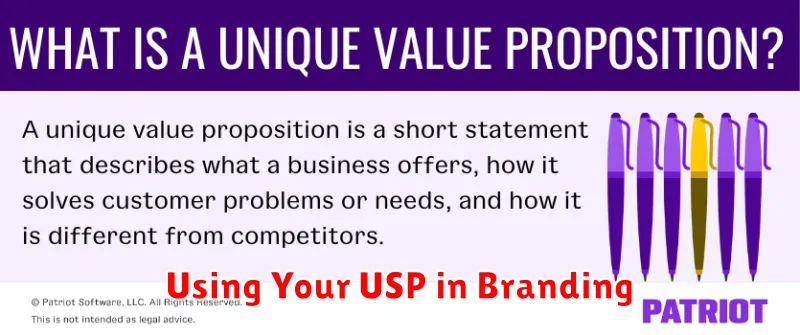
Once you’ve defined your unique selling proposition (USP), it’s crucial to integrate it into your branding efforts. This ensures consistent messaging and reinforces your distinct value to customers.
Your USP should be woven into your brand messaging, including your slogan, website copy, marketing materials, and even internal communications. A clearly articulated USP helps customers quickly understand what sets you apart from the competition.
Consider how your USP influences your visual identity. Does it necessitate a particular color scheme, font, or imagery? Consistency between your visual branding and your USP further solidifies your brand in the minds of consumers.
Incorporating USP into Website and Ads
Once you’ve crafted a compelling USP, strategically integrate it into your website and advertising campaigns. On your website, the USP should be prominently displayed. Consider featuring it in the hero section, navigation menu, or as a dedicated section outlining your unique benefits. Ensure it’s concise and easily understood.
In advertising, your USP should be the central message. Whether it’s a print ad, social media post, or video commercial, emphasize how your unique offering solves a customer problem or fulfills a need better than the competition. Consistency is key. Repeat your USP across all marketing channels to reinforce your brand message and build recognition.
Testing USP Effectiveness
After crafting your USP, rigorous testing is crucial. This involves gauging its resonance with your target audience. Does it clearly communicate your unique value? Does it differentiate you from competitors?
Effective testing methods include A/B testing different versions of your USP in marketing materials. Monitor key metrics like conversion rates, click-through rates, and customer feedback. Analyze the data to determine which version performs best. Refine your USP based on the results.
Refining Your Messaging Over Time
Your USP isn’t static. It requires ongoing refinement as your business evolves and the market shifts. Continuously analyze your customers’ feedback and your competitors’ offerings.
Track key performance indicators (KPIs) related to your messaging, such as website conversion rates and customer acquisition cost. This data provides valuable insights into what resonates with your target audience.
Don’t be afraid to experiment with different variations of your USP. A/B testing can help you identify which messaging performs best.
USP Examples from Popular Brands
Examining successful USPs provides valuable insight for crafting your own. Domino’s Pizza’s historical “30 minutes or it’s free” guarantee emphasized speed and convenience, directly addressing a customer need. While no longer universally offered, it solidified their position in the fast-food delivery market.
M&M’s “melts in your mouth, not in your hand” USP highlights a key product differentiator – the candy coating preventing messy fingers. This simple yet effective message resonates with consumers seeking a convenient and enjoyable treat.
Head & Shoulders focuses on a specific customer problem: dandruff. Their USP, centered around combating dandruff and promoting scalp health, clearly defines their target audience and the unique benefit they offer.
Avoiding Generic Claims
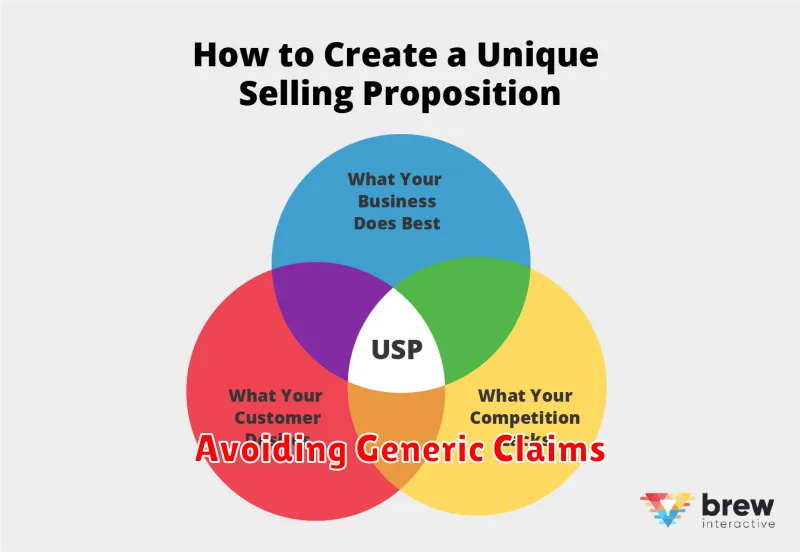
A key aspect of crafting a strong USP is avoiding generic claims. Statements like “high-quality” or “best service” are overused and lack specificity. Customers have heard these claims countless times and they no longer hold significant weight.
Instead of relying on these vague descriptors, focus on tangible benefits and quantifiable results. What specific problem does your product solve? How is it measurably better than the competition? Providing concrete evidence will make your USP far more persuasive and memorable.
